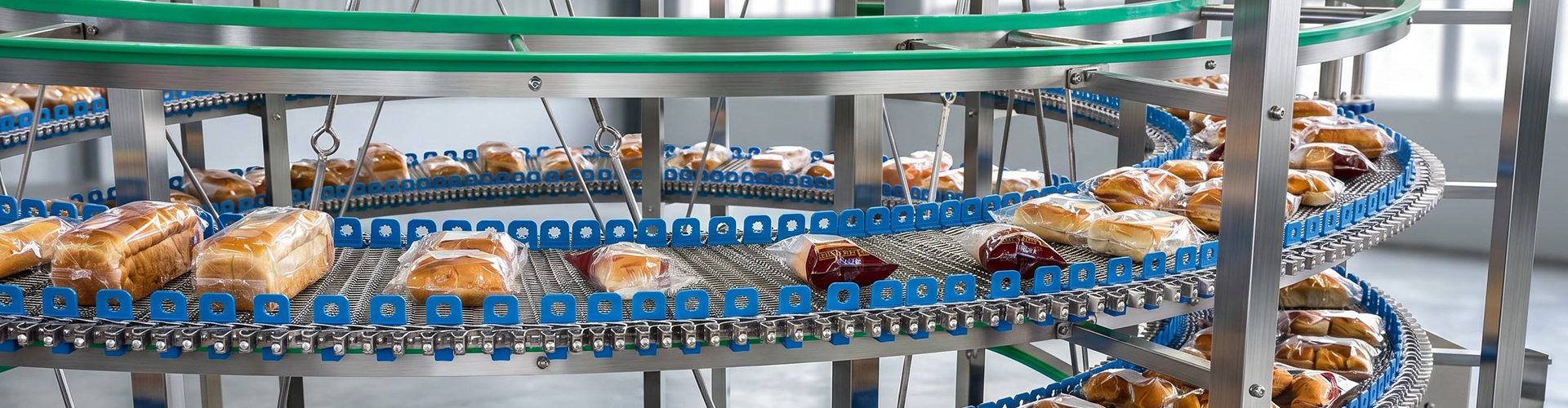
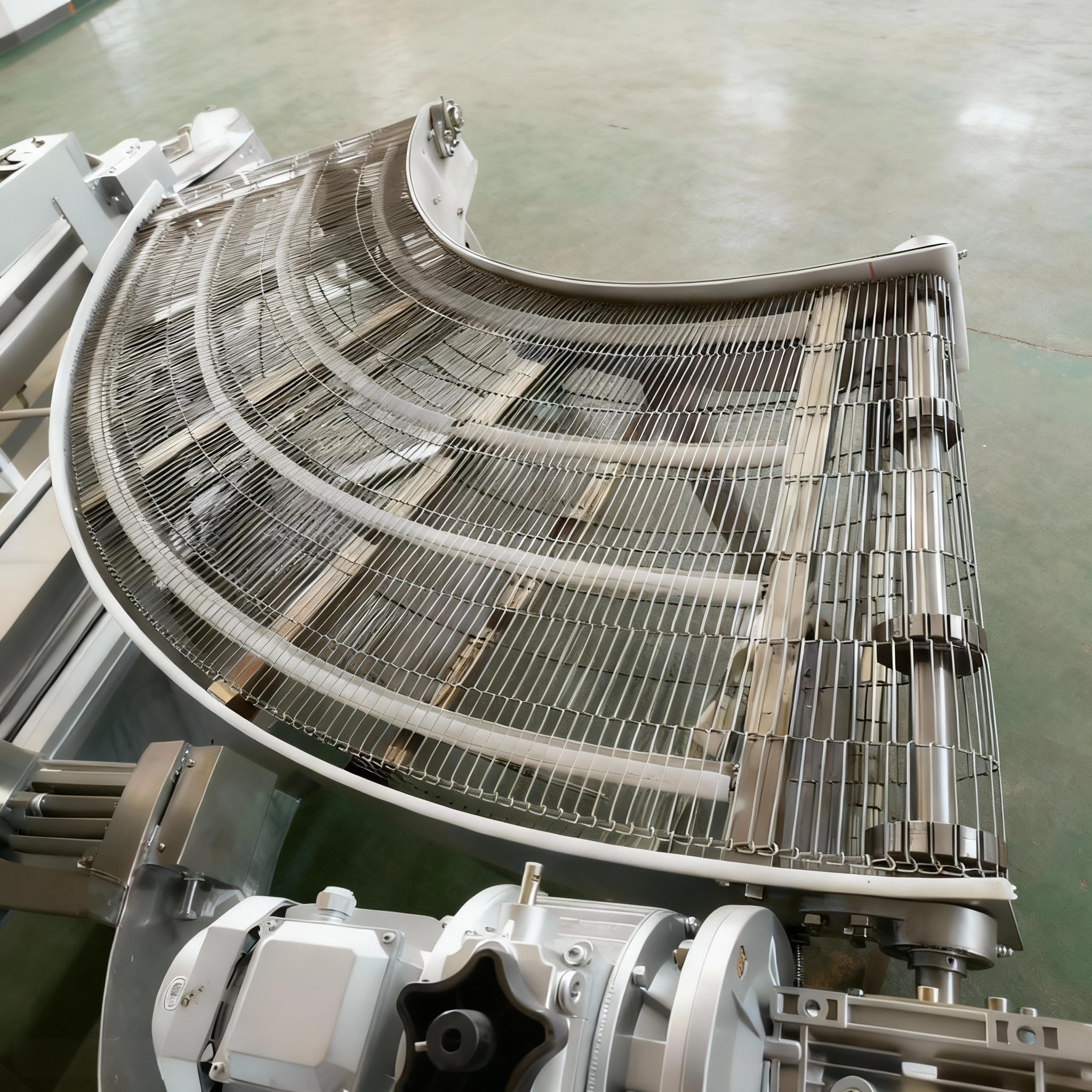
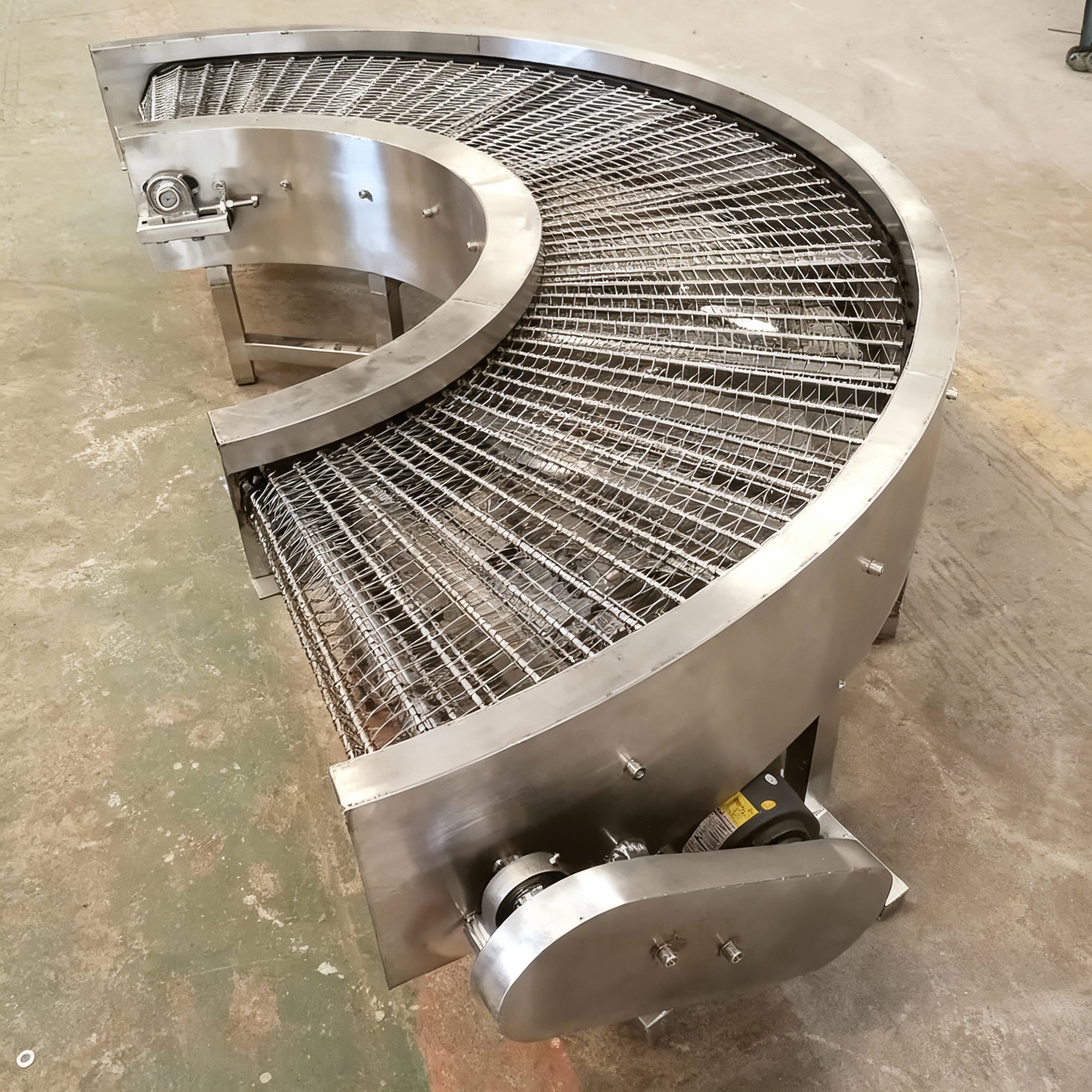
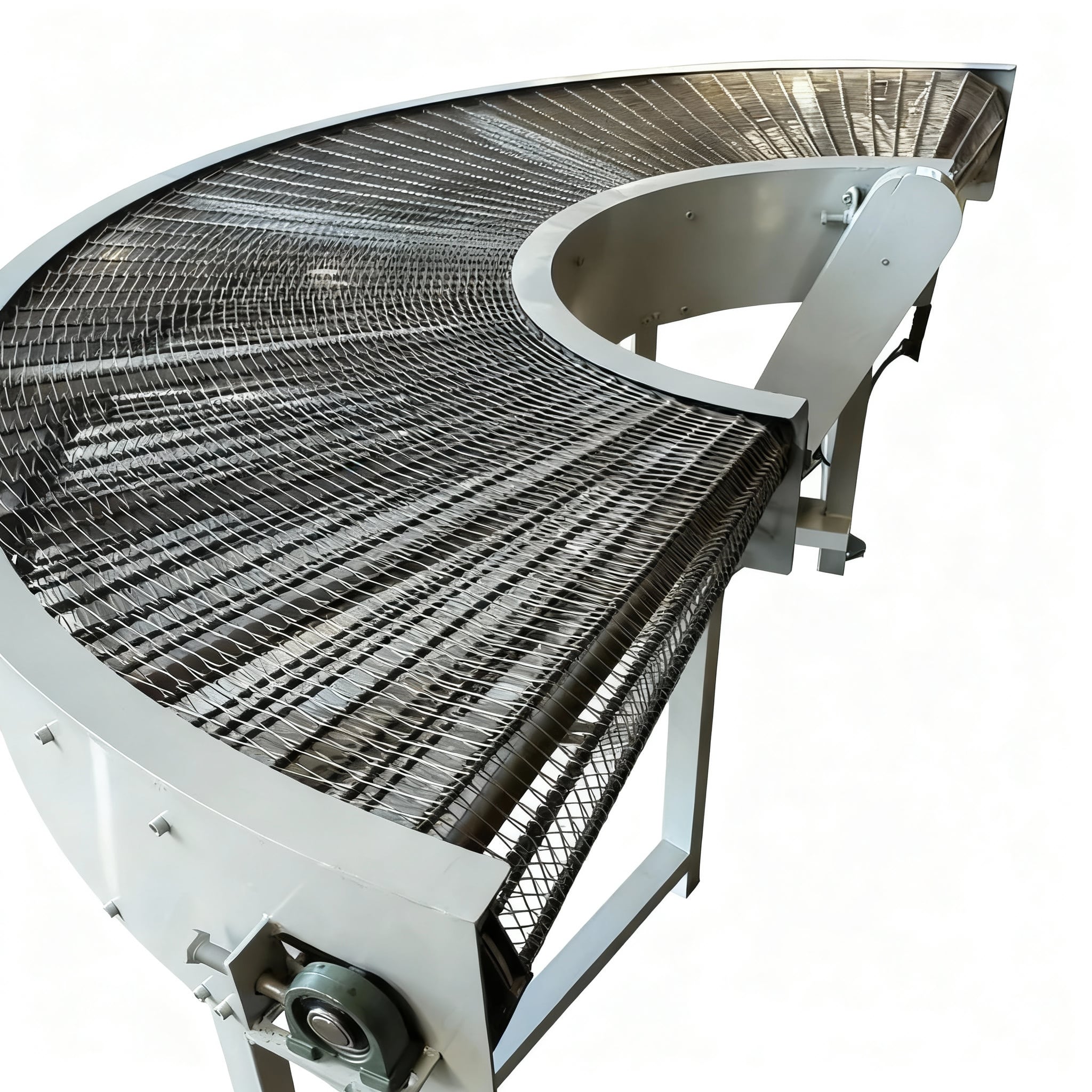
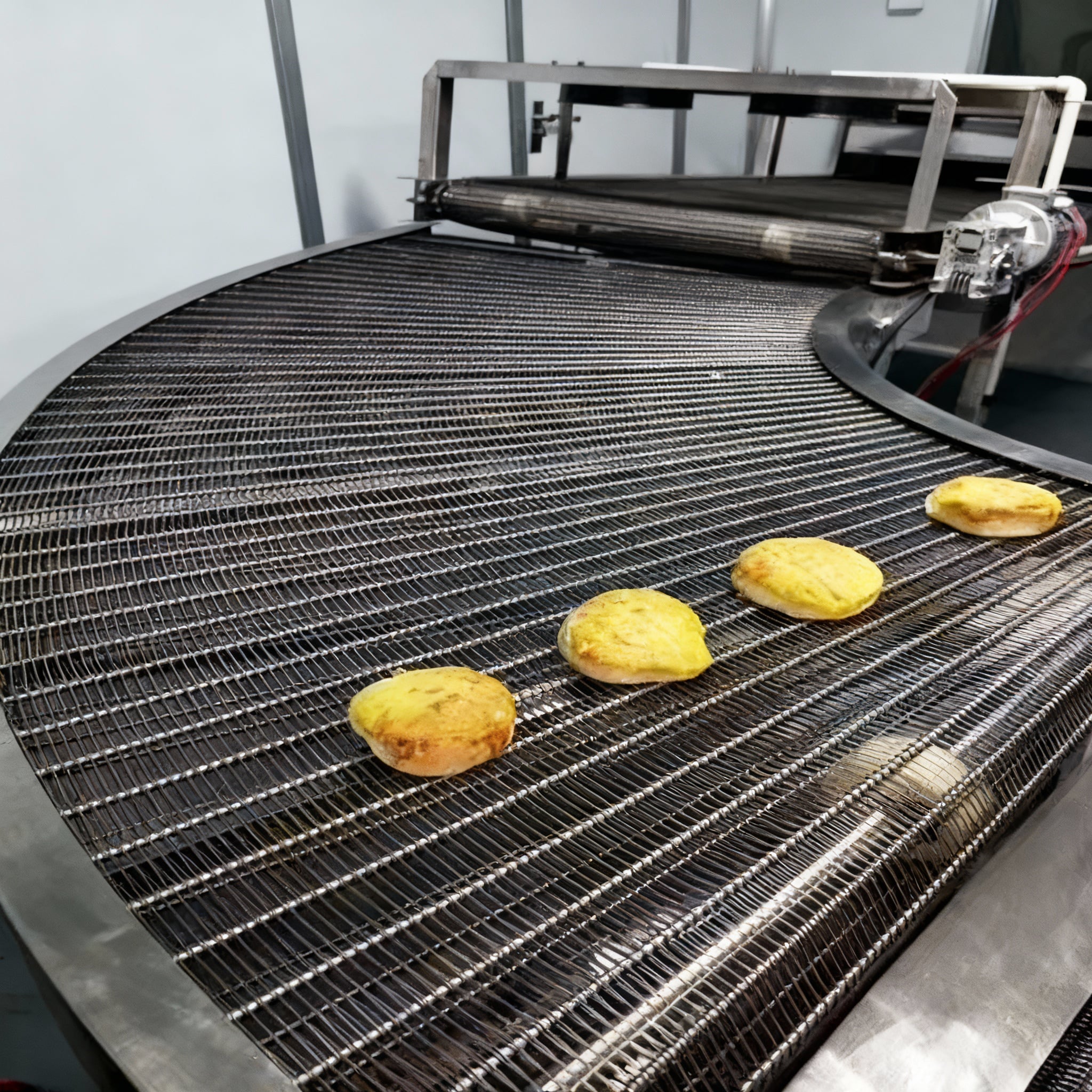
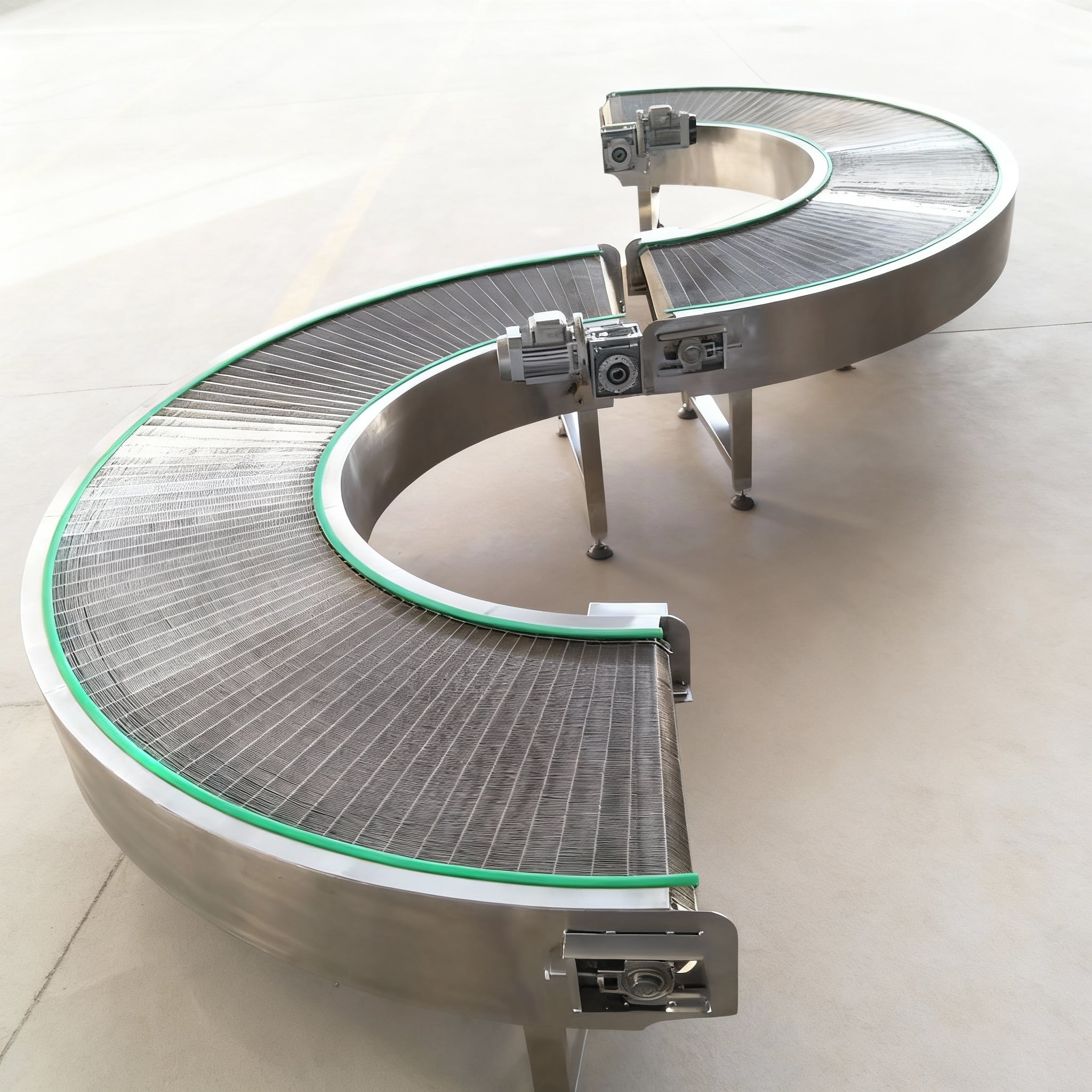
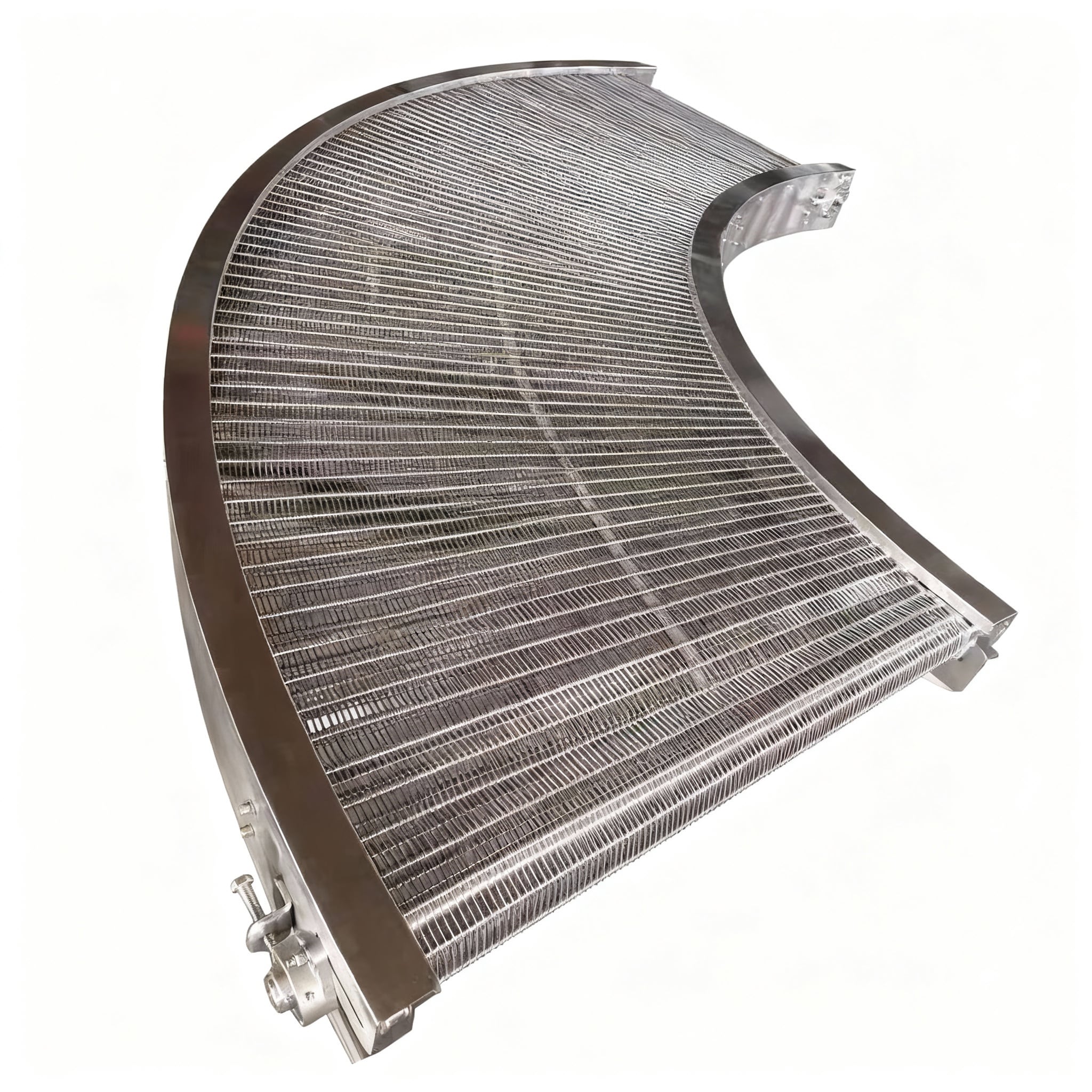
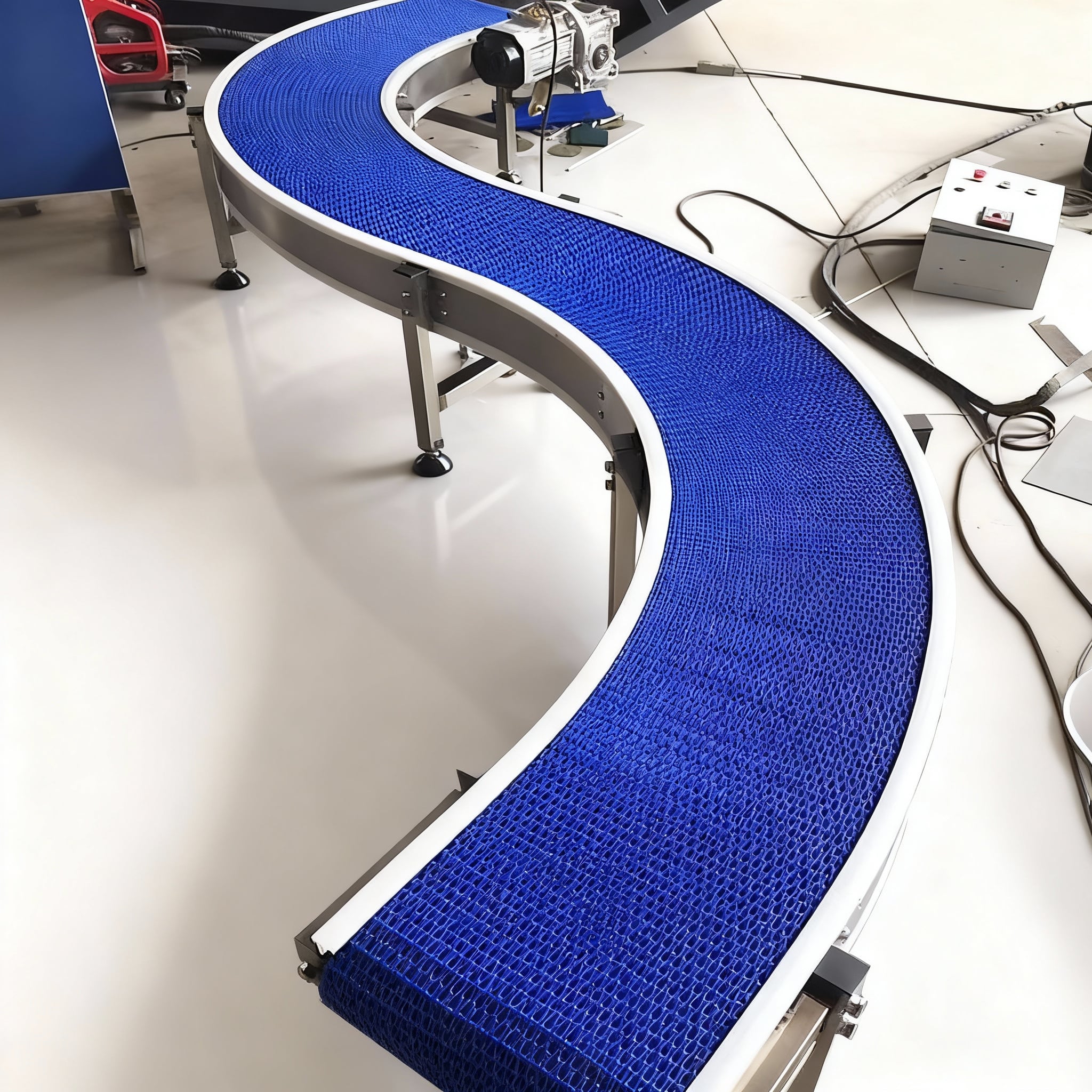
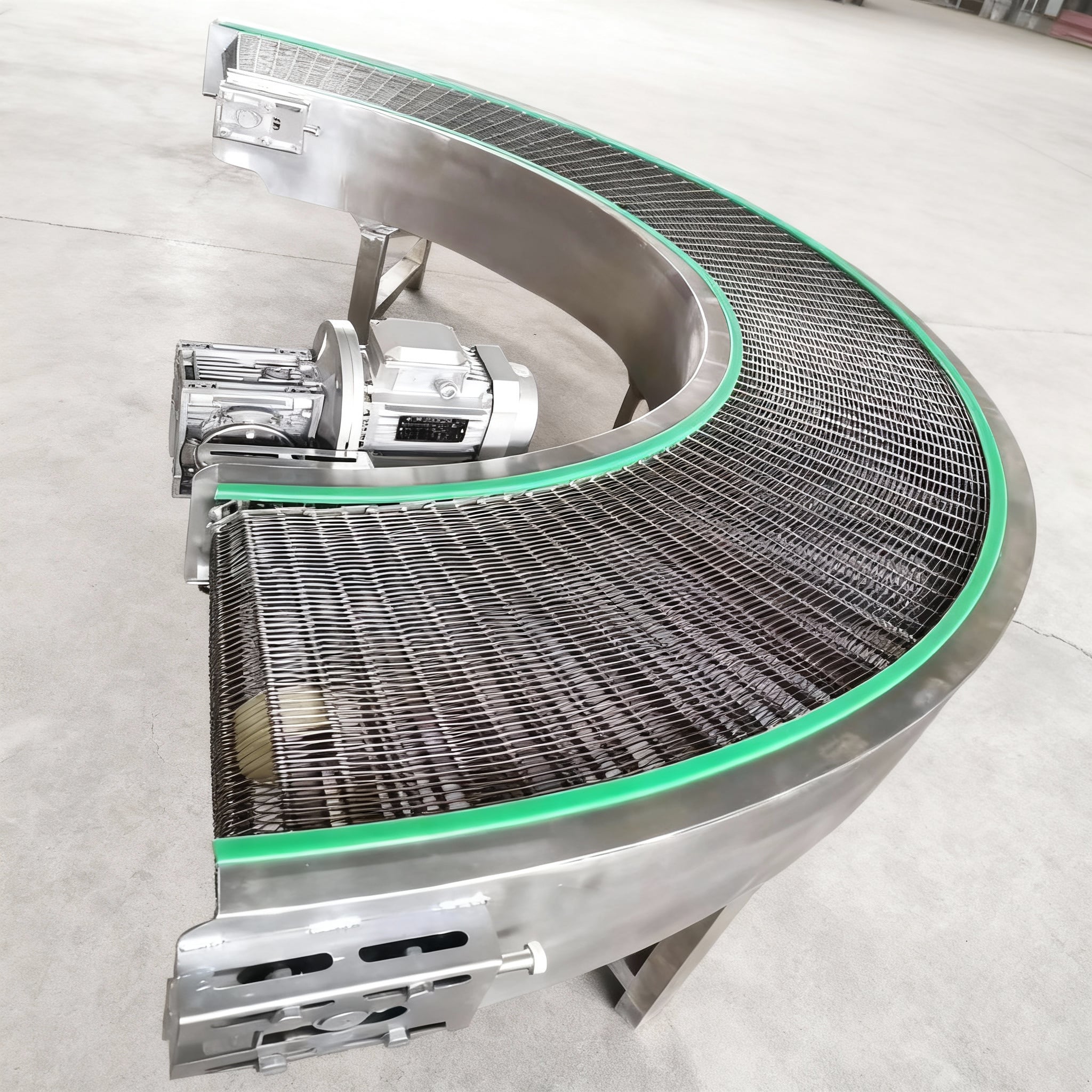
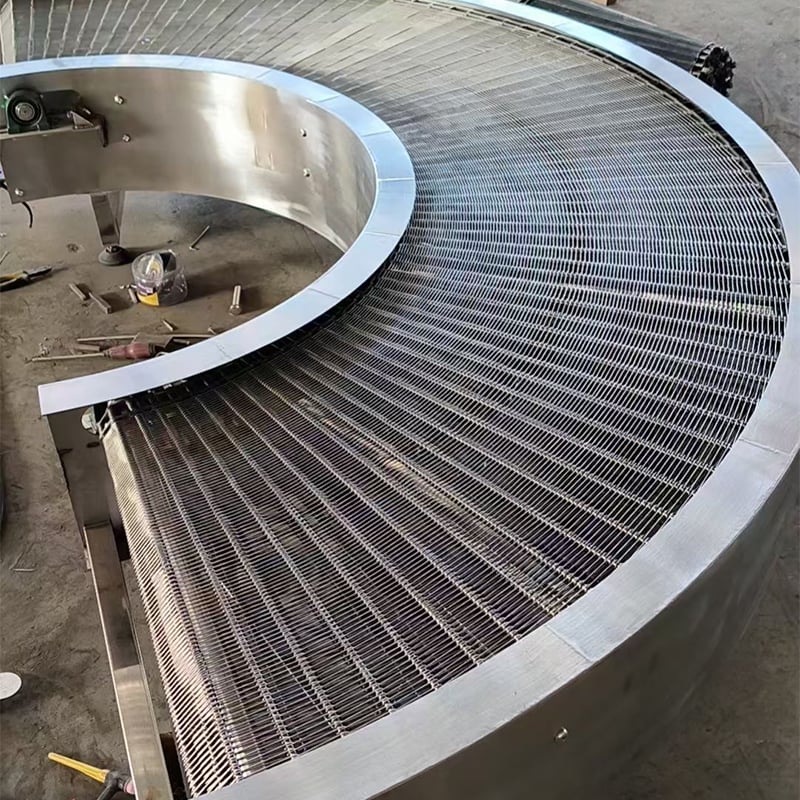
The turning mesh belt conveyor is mainly used in the production line, which is a special conveyor with the function of linking. It has the advantages of flexibility and easy to connect with other conveyor equipment in the production line.
The Turning Mesh Belt Conveyor is a specialized conveying system designed to provide smooth directional changes and efficient material transfer within automated production lines. Unlike traditional straight conveyors, this advanced conveyor equipment is developed with turning capabilities, allowing products to move around corners while maintaining continuous and stable transportation. It plays an important role in optimizing factory layouts, improving production efficiency, and creating flexible material handling systems.
The Turning Mesh Belt Conveyor is mainly used as a connecting unit between different sections of production lines. It helps manufacturers build more compact and efficient conveying routes by allowing materials to change direction without additional manual handling. Whether connecting processing equipment, packaging systems, inspection stations, or storage areas, this conveyor provides a reliable solution for continuous product movement.
The unique mesh belt structure of the Turning Mesh Belt Conveyor offers excellent flexibility and adaptability. The belt can smoothly follow curved paths while maintaining stable product transportation. This makes it suitable for production environments where space utilization and workflow optimization are important. By reducing unnecessary transportation distances and improving equipment arrangement, it helps businesses achieve more efficient production operations.
Compared with conventional conveying systems, the Turning Mesh Belt Conveyor provides greater flexibility in production line design. It can be integrated with straight conveyors, chain conveyors, roller conveyors, and other automated equipment to form complete conveying systems. This allows manufacturers to create customized transportation layouts based on specific production requirements.
The Turning Mesh Belt Conveyor can be designed for different curved transportation needs, helping factories achieve smooth transitions between multiple workstations. It is especially useful in production environments where products need to follow complex routes due to limited floor space or specific process requirements.
The system is widely used for transporting various products, including bottled goods, canned products, cartons, packaged materials, and industrial components. Its stable conveying performance ensures that products move safely through different production stages while maintaining consistent workflow efficiency.
The Turning Mesh Belt Conveyor is also designed to support customized industrial applications. Different products have different transportation characteristics, so the conveyor system can be adjusted according to material type, production conditions, and layout requirements. This adaptability allows manufacturers to achieve better compatibility with their existing production systems.
With its flexible design, reliable operation, and excellent integration capability, the Turning Mesh Belt Conveyor has become an essential component in modern automated production lines. It helps companies improve space utilization, reduce handling requirements, and build more efficient manufacturing processes.
The Turning Mesh Belt Conveyor offers a combination of flexibility, durability, and efficient conveying performance, making it suitable for various industrial applications. Its advanced design allows manufacturers to solve complex transportation challenges while maintaining stable production operations.
One of the most important features of the Turning Mesh Belt Conveyor is its excellent turning capability. The conveyor can create smooth curved transportation routes, allowing products to change direction without interruption. This helps eliminate unnecessary transfer points and reduces the complexity of production line layouts.
Another major advantage of the Turning Mesh Belt Conveyor is its high flexibility in system integration. It can be connected with multiple types of conveying equipment to create complete production systems. Whether used with straight conveyors, feeding systems, packaging machines, or inspection equipment, it provides seamless product transfer between different processes.
The mesh belt design provides several functional benefits. The open structure allows good ventilation and drainage, making the Turning Mesh Belt Conveyor suitable for applications involving cooling, cleaning, drying, or other processes requiring airflow circulation. This feature expands its application range across different industries.
The Turning Mesh Belt Conveyor also provides stable and reliable product transportation. The carefully designed curved belt structure helps maintain smooth movement while reducing product shifting during directional changes. This is especially important for industries where product positioning and transportation accuracy are essential.
Space efficiency is another key benefit of the Turning Mesh Belt Conveyor. In many manufacturing facilities, available floor space is limited, and traditional straight conveyor arrangements may require unnecessary installation areas. By using curved conveying paths, this system helps maximize workshop space and create more efficient production layouts.
The conveyor system is also highly adaptable to different working environments. It can be designed for industries with specific requirements, including high humidity, high-temperature conditions, or environments involving chemical exposure. This flexibility allows businesses to select suitable materials and structures according to actual operating conditions.
Durability is another important characteristic of the Turning Mesh Belt Conveyor. The use of strong structural materials provides reliable performance during long-term operation. Its robust construction helps reduce maintenance needs and improves equipment service life, providing long-term value for manufacturers.
The Turning Mesh Belt Conveyor also supports complex production workflows. Multiple conveyor units can be combined with other machines to create diversion, merging, and multi-directional transportation systems. This allows manufacturers to complete more complex production processes through automated material handling.
Another advantage of the Turning Mesh Belt Conveyor is its ability to improve worker efficiency. By creating optimized transportation routes, it reduces unnecessary product movement and allows operators to work closer to their assigned production areas. This contributes to smoother workflow management and improved overall productivity.
Through its combination of flexible layout design, stable performance, and strong adaptability, the Turning Mesh Belt Conveyor provides an effective solution for businesses seeking to optimize automated production lines.
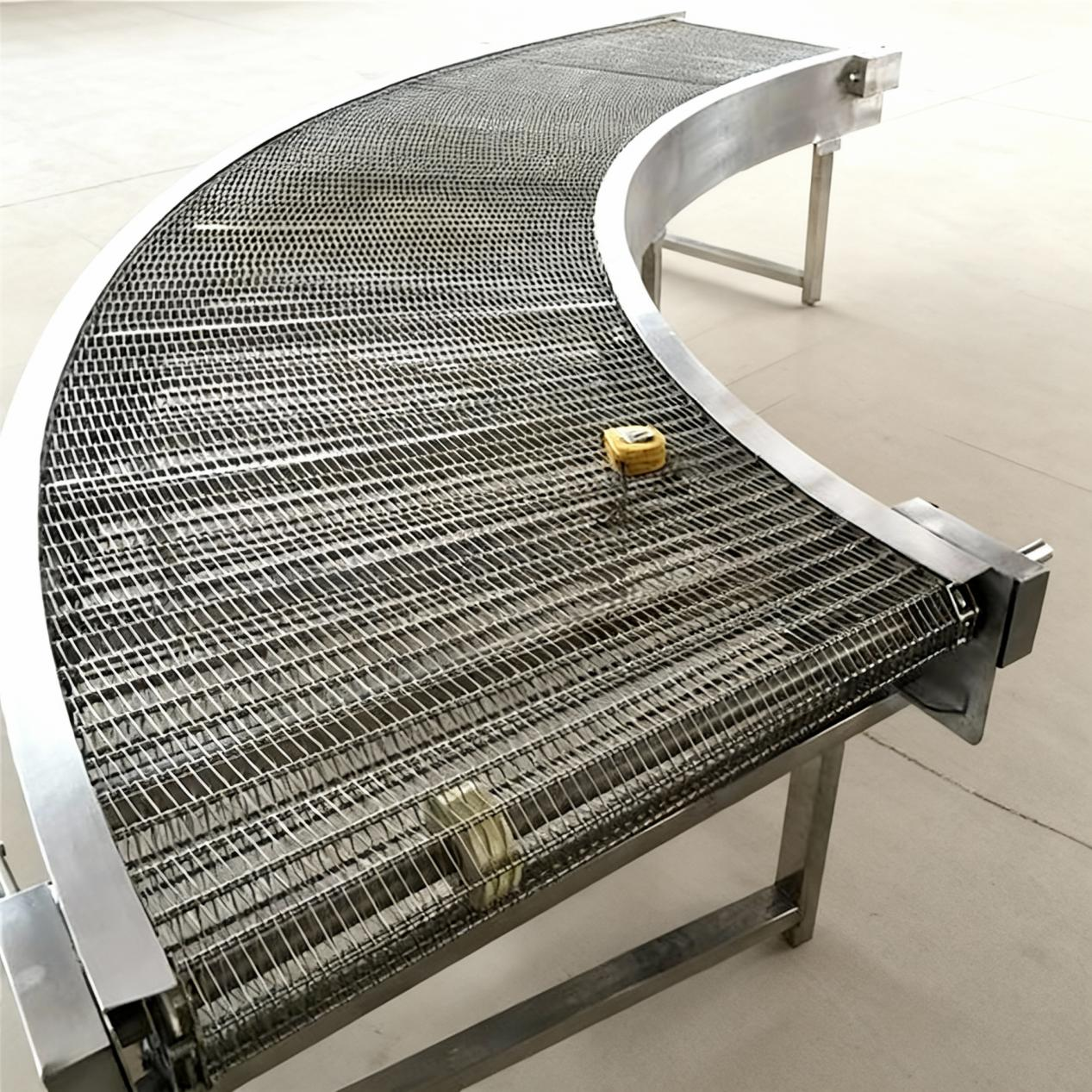
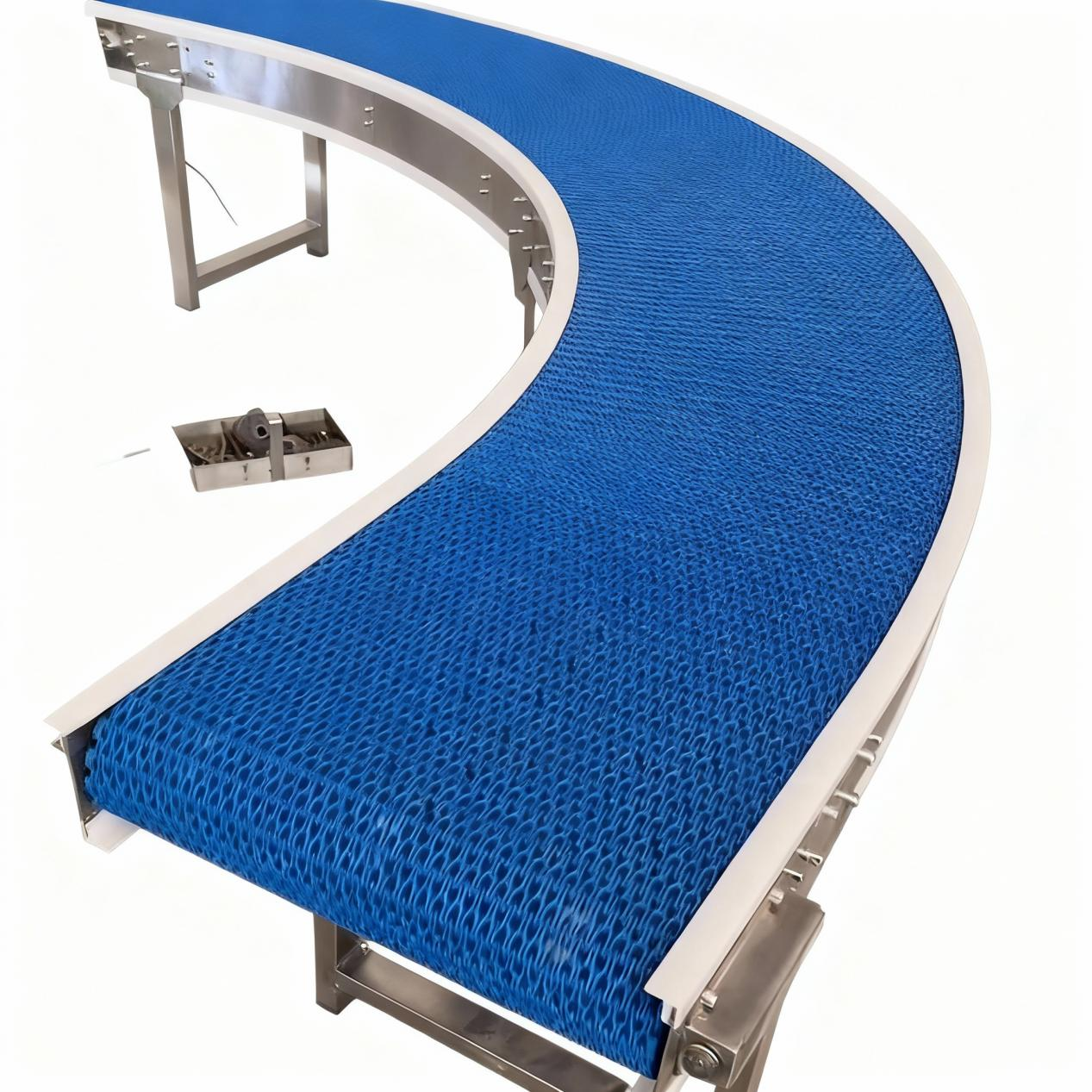
The Turning Mesh Belt Conveyor is widely used in industries that require flexible product transportation and efficient production line connections. Its ability to handle curved conveying routes makes it suitable for many automated manufacturing environments.
In the electronics industry, the Turning Mesh Belt Conveyor is commonly used for transporting electronic components, finished products, and assembly materials between different production stations. Electronics manufacturing often requires compact layouts and precise material movement, making curved conveyor systems an effective solution for improving workflow efficiency.
In the beverage industry, the Turning Mesh Belt Conveyor is widely applied for transporting bottles, cans, and packaged beverage products. It can connect filling, inspection, labeling, and packaging equipment while maintaining smooth product flow throughout the production process.
The food processing industry also benefits from the use of the Turning Mesh Belt Conveyor. It is suitable for transporting packaged foods, containers, and processed products through different production stages. The mesh belt structure provides good ventilation and supports applications requiring cleaning, cooling, or drying processes.
In the packaging industry, the Turning Mesh Belt Conveyor helps improve the efficiency of carton, box, and container transportation. It allows packaging lines to adapt to different factory layouts while maintaining continuous material movement between production areas.
The machinery manufacturing industry uses the Turning Mesh Belt Conveyor for transporting industrial components and assembled products. Its strong structure and stable operation make it suitable for production environments requiring reliable material handling.
The pharmaceutical industry also benefits from this conveyor system due to its ability to support clean and organized production workflows. It can be integrated into automated pharmaceutical production lines to transport products between different processing areas.
The Turning Mesh Belt Conveyor is also widely used in chemical, rubber, plastic, automotive, motorcycle, and logistics industries. Its flexible design allows it to handle different product types, including bottled, canned, boxed, and barrel-shaped goods.
In logistics and automated warehouse systems, the Turning Mesh Belt Conveyor provides an efficient way to connect different transportation routes. It helps optimize internal logistics operations by enabling smooth product movement around obstacles and between different processing areas.
For factories with complex production requirements, the Turning Mesh Belt Conveyor provides a practical solution for building customized conveying networks. It can work together with multiple machines to create efficient material flow systems that improve production efficiency and reduce operational complexity.
The Turning Mesh Belt Conveyor is a flexible and reliable conveying solution designed to improve material transportation efficiency in modern production environments. With its curved conveying capability, strong adaptability, and excellent integration performance, it helps manufacturers create optimized production layouts and smoother workflows.
By reducing unnecessary product handling, maximizing factory space utilization, and supporting complex conveying systems, the Turning Mesh Belt Conveyor provides significant value for industries seeking higher automation and improved productivity.
For businesses looking to build efficient and flexible production lines, the Turning Mesh Belt Conveyor offers outstanding performance, durability, and customization possibilities. Its wide application range and reliable operation make it an important component in modern industrial material handling systems.
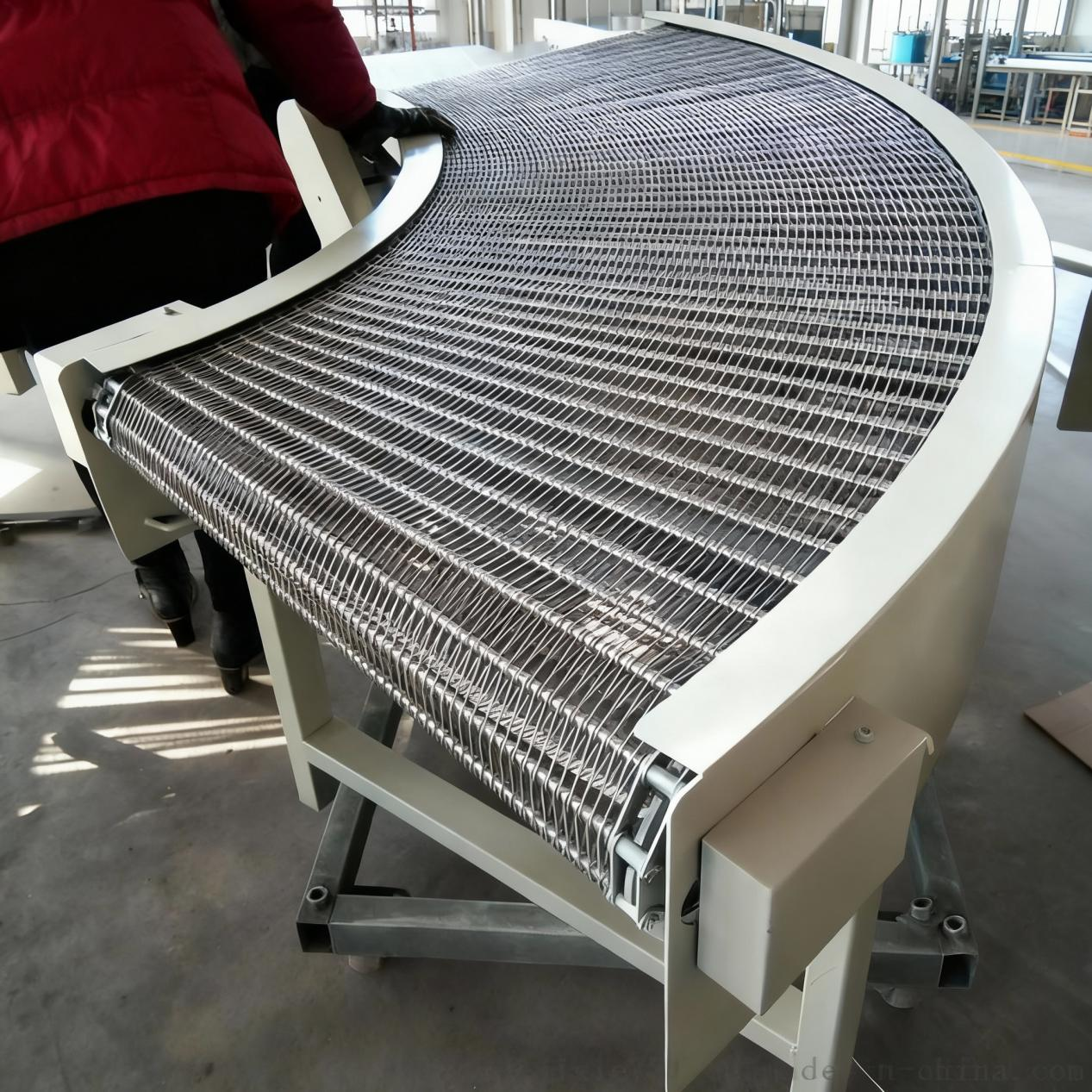
When designing and installing a turning mesh belt conveyor, it is essential to ensure the shortest possible transportation route for components. This facilitates close-range operation by production workers and streamlines the workflow of auxiliary service departments. The system should also maximize the utilization of production workshops, warehouses, or storage facilities while considering seamless connections between conveyor installations. To achieve optimal production efficiency, the arrangement method of the turning conveyor must be carefully planned during layout design. This ensures maximum benefits when multiple workstations are involved in a process, while fully complying with the operational workflow.
The transition between the turning belt conveyors should be easy to connect. It can be used to form a complex conveying system and a diversion and confluence system with multiple conveying lines and other conveying equipment or special machines to complete the multi-faceted process needs, which is widely used.
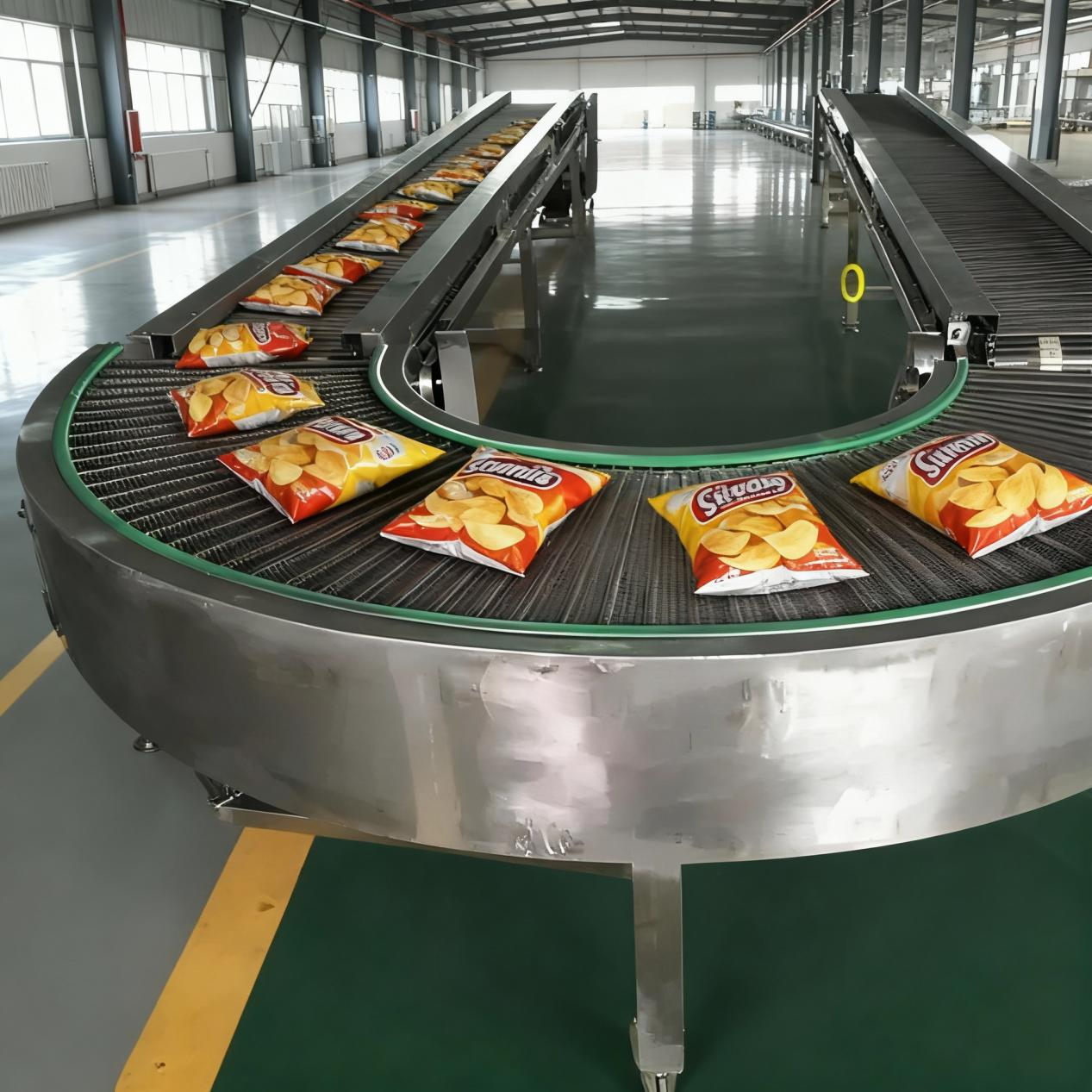
The application scope includes: electronics, beverages, food, packaging, machinery, light industry, tobacco, chemicals, pharmaceuticals, rubber and plastics, automotive and motorcycle, logistics, etc. It is also applicable to various bottled, canned, carton, and barrelled products.
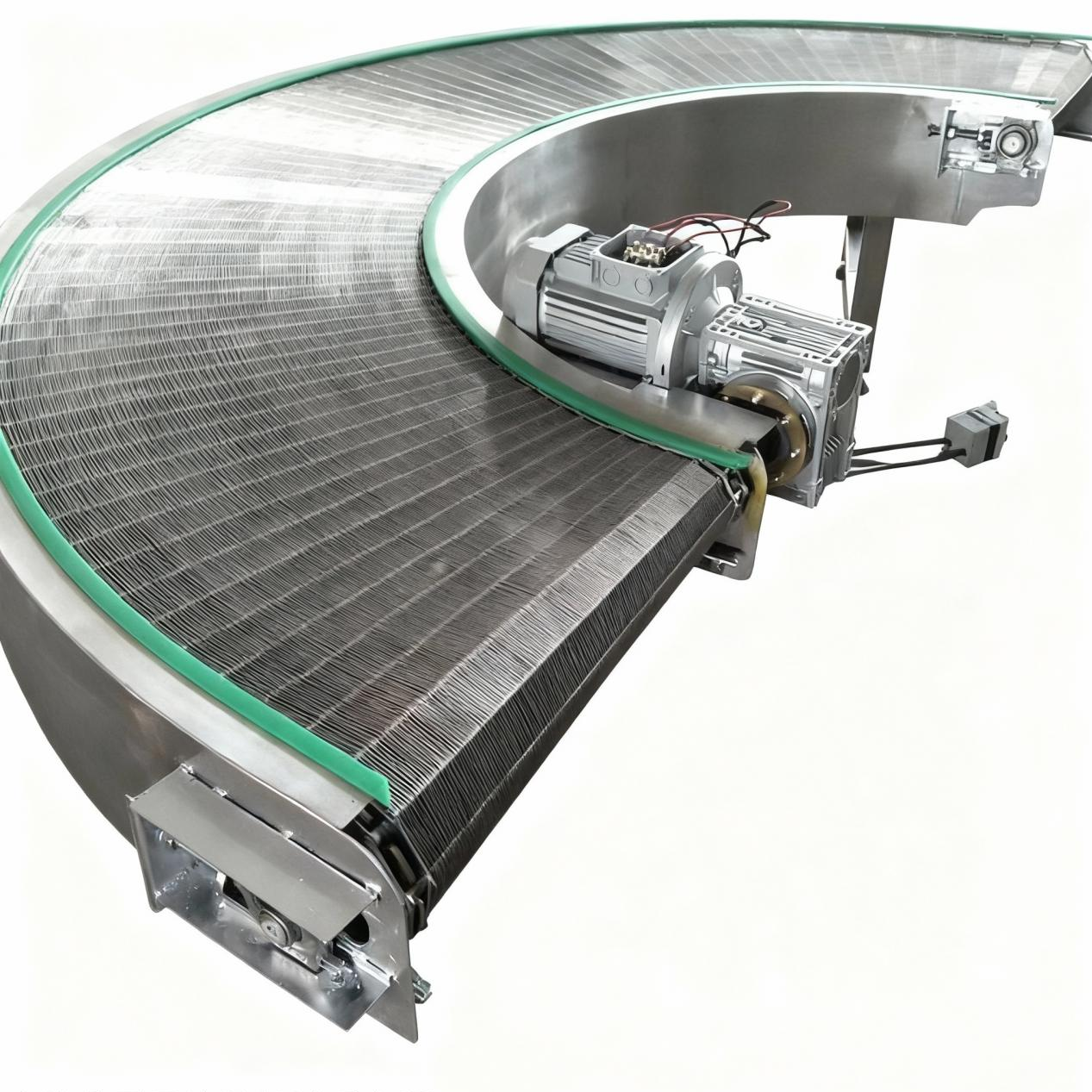
The main materials of the turning mesh belt conveyor are carbon steel, stainless steel and plastic steel.
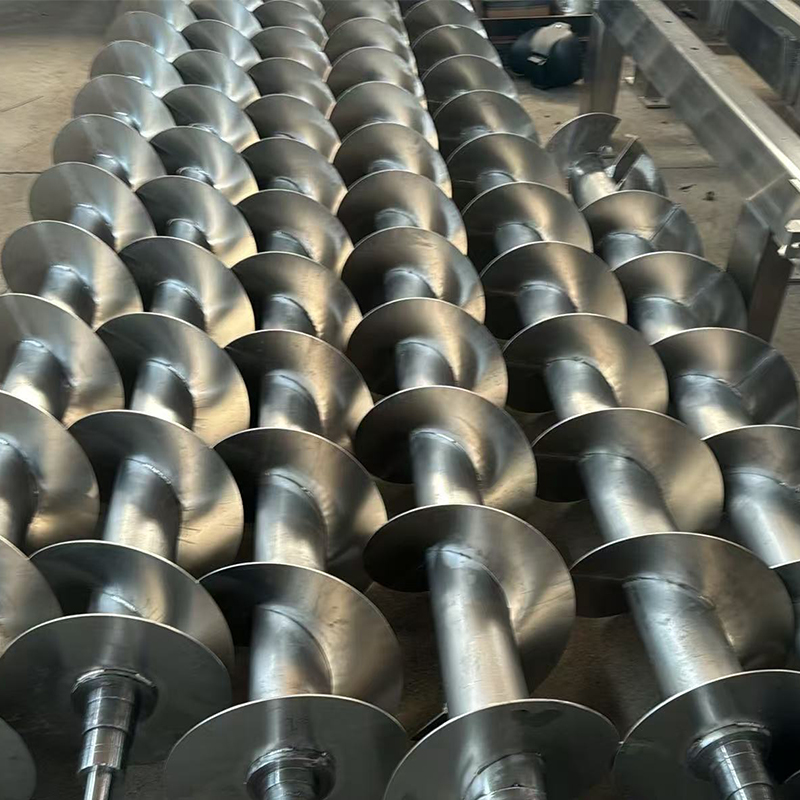
Screw Conveyor
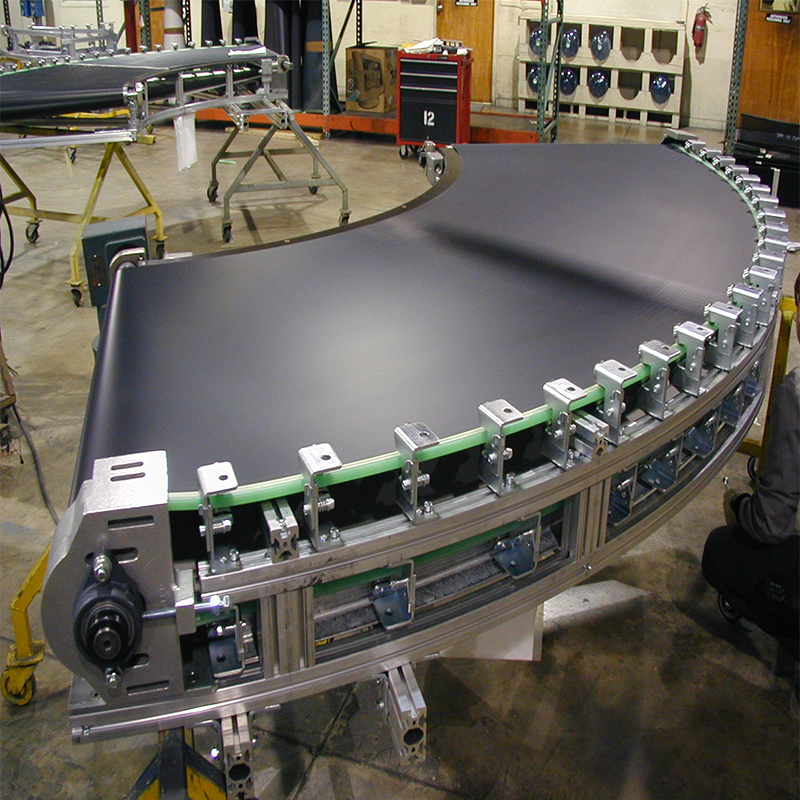
PU Conveyor
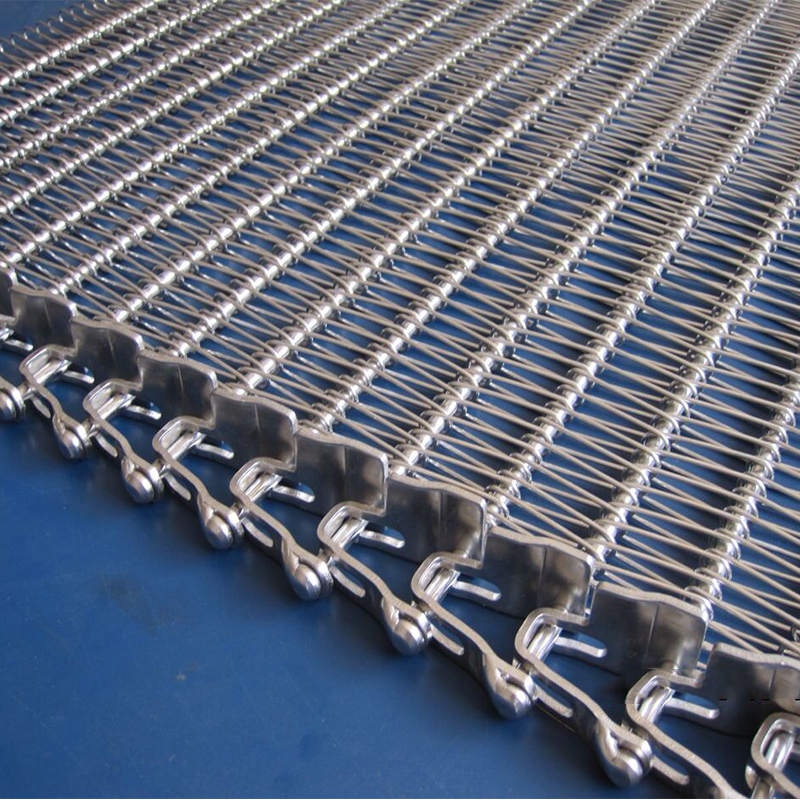
Spiral Wire Mesh Belt
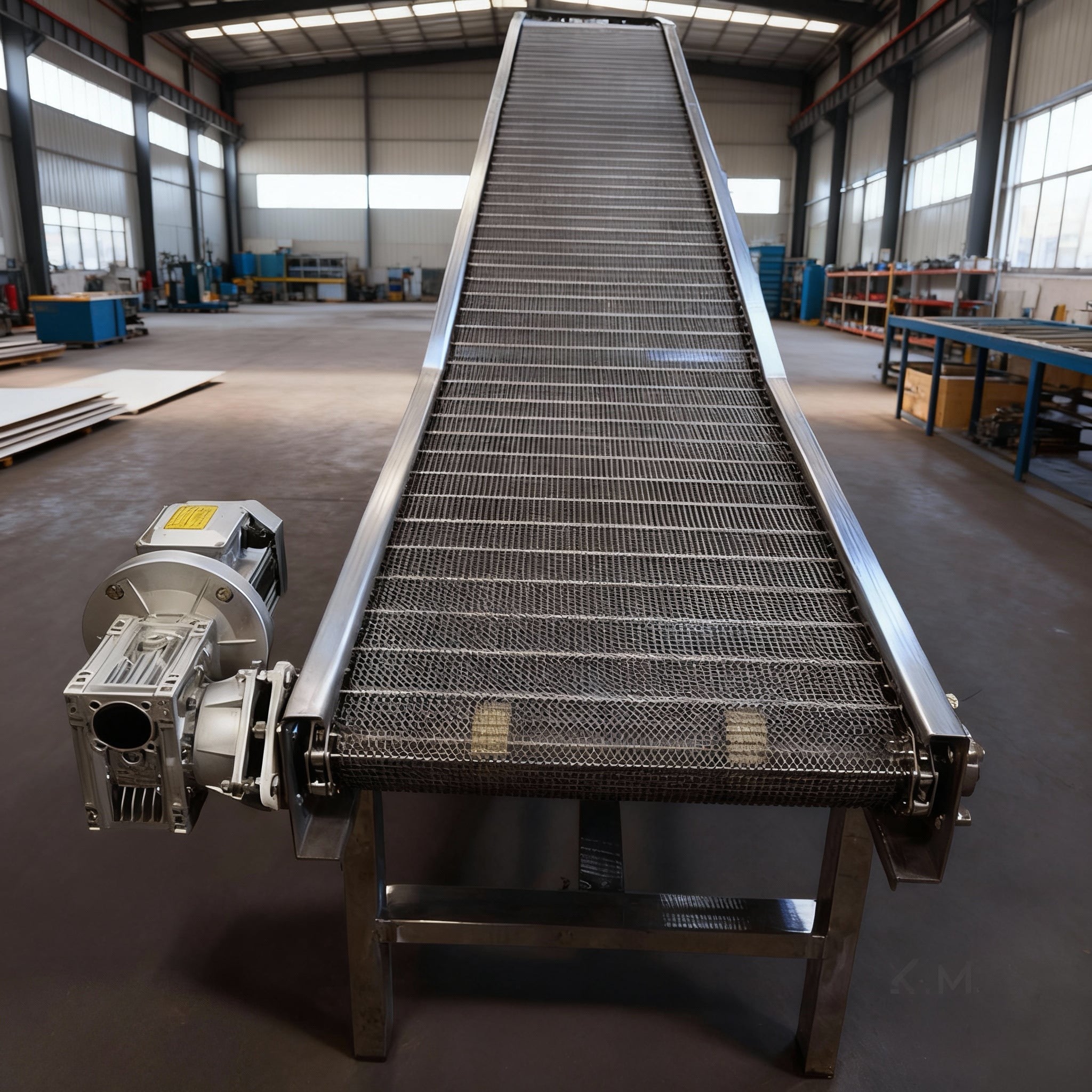
Climbing Mesh Belt Conveyor
Sunshine all products will make you absolutely satisfied, we always follow the customer first production concept, strive to open up domestic and foreign markets and are willing to establish long-term business cooperation with each customer. Welcome friends from all walks of life to come to guide, discuss cooperation!
 EN
EN