Application Case of a Gypsum Powder / Lime Powder Customer in the United States
The customer is a building materials company in the United States, specializing in the production of non-metallic mineral products such as gypsum powder and lime powder. The company mainly serves construction projects, chemical distributors, and other industrial channels.
The customer’s original production line relied on traditional manual material handling and manual packaging methods. As production volume continued to increase, several major issues became increasingly obvious:Low Efficiency:The maximum production capacity was only about 500 kg/h. After gypsum powder was produced, workers had to manually load the material into hand carts and transport it approximately 50 meters to the packaging area. Each round trip, including loading, unloading, and waiting time, took around 30 minutes on average. The process required 6 dedicated workers for transportation and handling, resulting in high labor costs.Large Space Occupation:A large number of transport carts were placed throughout the workshop, occupying significant floor space. The low space utilization rate, combined with congested transport paths, created potential safety risks.Severe Dust Pollution:During manual transportation, dust leakage and material loss were major concerns. Fine powder spread throughout the production area, causing serious air pollution and affecting workers’ health. Meanwhile, material spillage was common, with a loss rate of approximately 3%.Poor Production Connection:After production, materials had to be manually transferred to the packaging area, creating a gap between production and packaging processes, reducing efficiency and increasing operating costs.
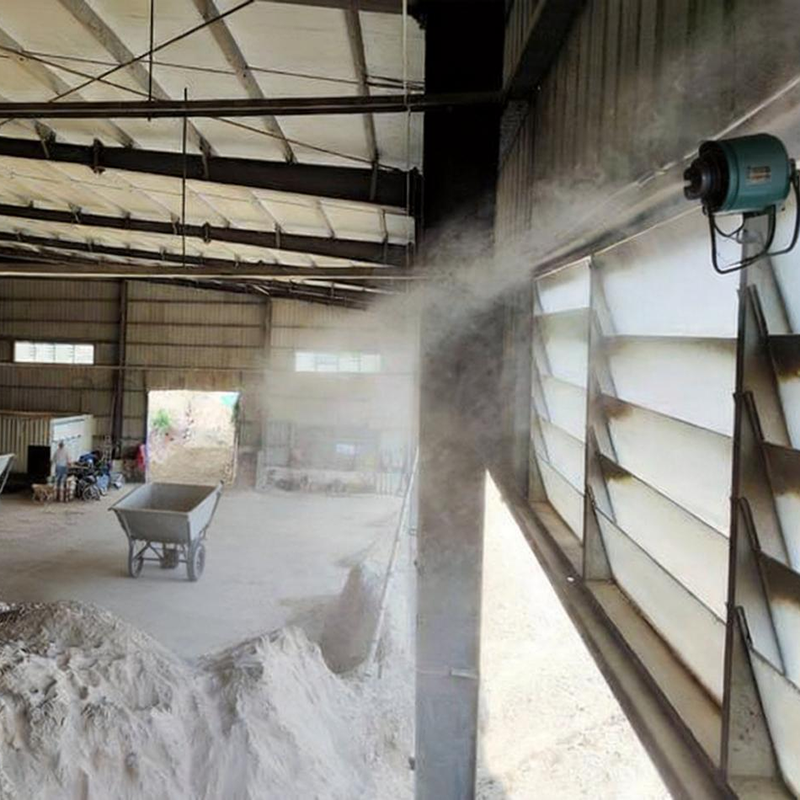
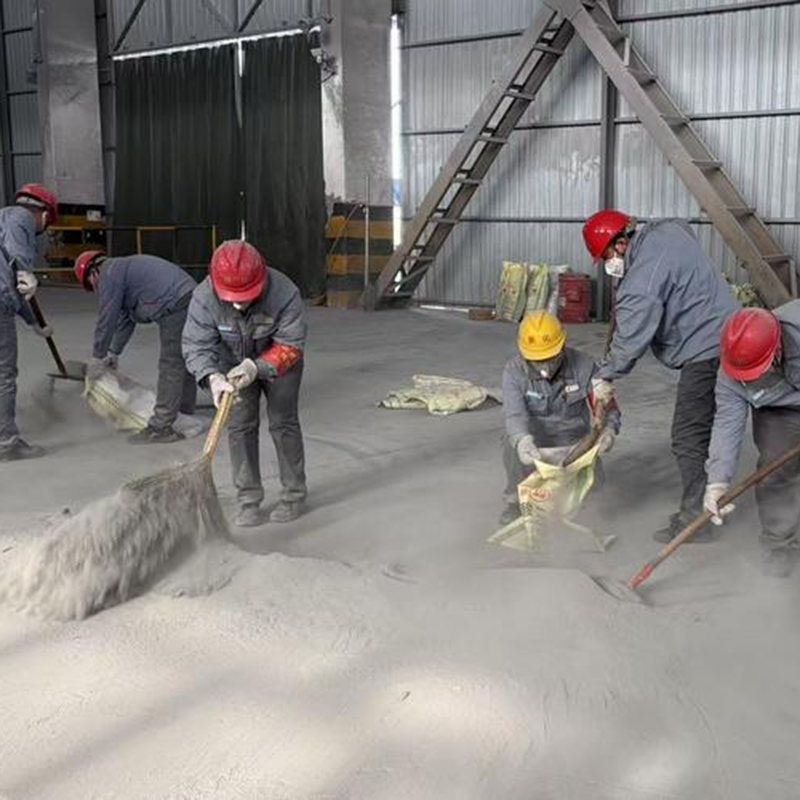
After initial communication with the customer, our team conducted a detailed analysis of the production environment, material characteristics, required conveying capacity, and other technical parameters.Based on the collected data, our engineering team developed multiple customized solutions for the customer’s evaluation. After selecting the optimal design, we chose a new composite material featuring excellent wear resistance and corrosion resistance to ensure long-term stable operation.Following multiple strict manufacturing processes, we successfully delivered a fully automated conveying system consisting of a screw conveyor + hopper elevator, perfectly matching the customer’s production requirements.
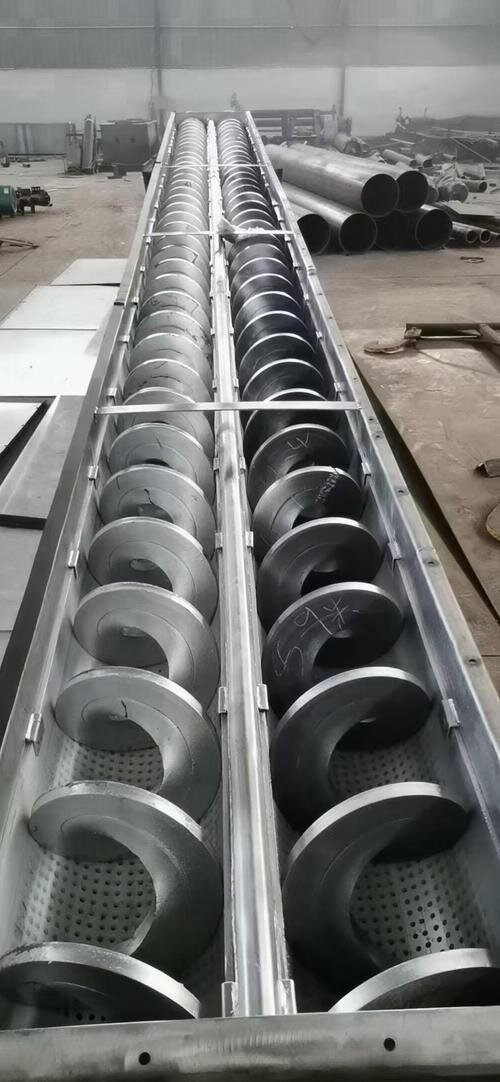
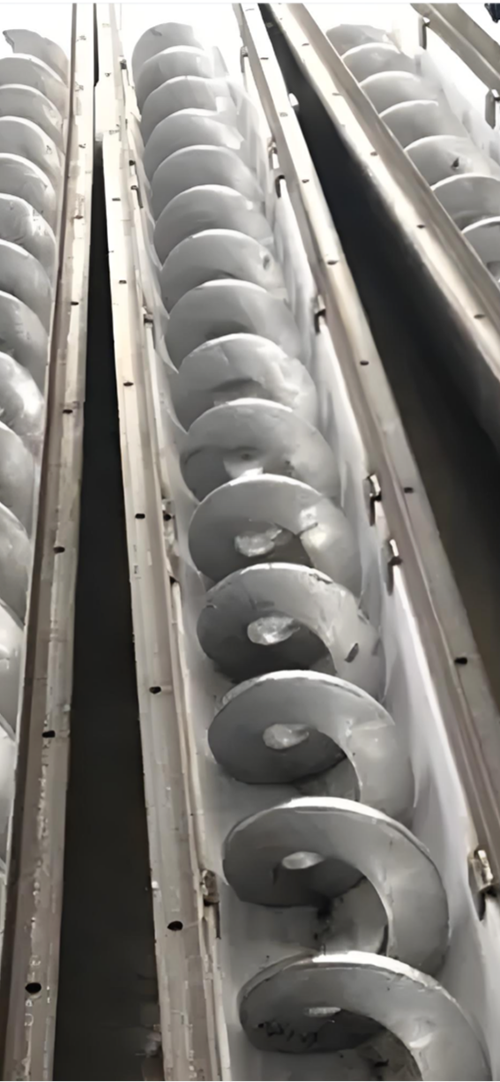
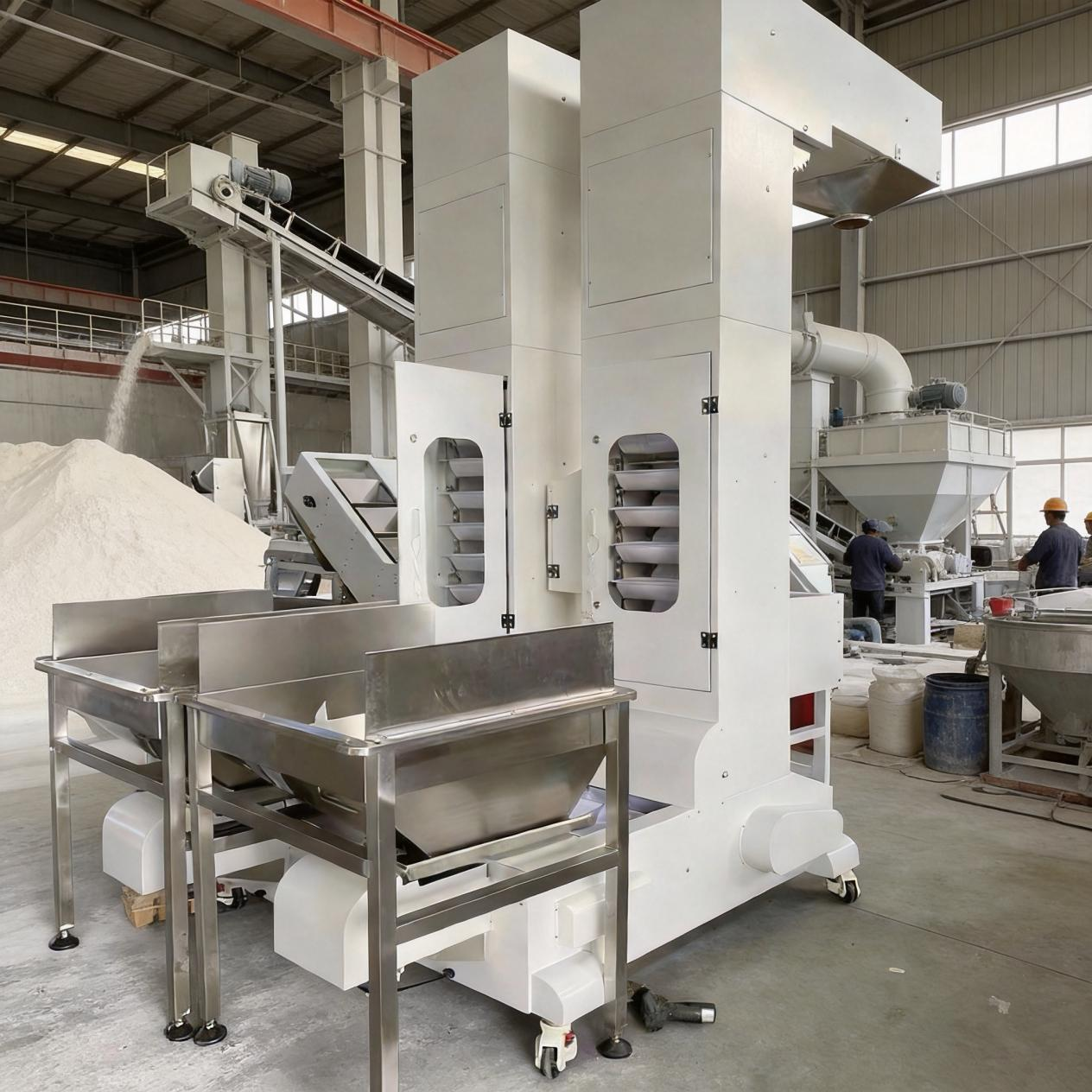
The screw conveyor features a compact structure with high conveying capacity, while the hopper elevator adopts a vertical lifting design that significantly reduces floor space requirements.Although the conveying distance exceeds 50 meters, the entire system occupies less than 40㎡ of production space. Compared with the previous manual cart transportation system, which required approximately 80㎡, the new solution reduces space occupation by 50%.The system perfectly fits the customer’s existing workshop layout, eliminating the need for factory expansion while creating more available production space and safer operating channels.
The screw conveyors and hopper elevators work together seamlessly to achieve continuous and efficient material transfer.The hopper elevator collects material from the bottom section and rapidly lifts it before discharging at the upper section. Through the continuous cycle of "scooping – lifting – discharging", the equipment can achieve vertical lifting heights of several tens of meters, greatly outperforming traditional manual handling methods or simple lifting equipment.With variable frequency motor control, the system can accurately match the upstream gypsum powder production equipment with a capacity of 2000 kg/h, enabling continuous, uninterrupted production and completely eliminating manual transportation and loading operations.
Both the screw conveyors and hopper elevators adopt a fully enclosed housing design. From the moment materials enter the feeding inlet until they are discharged at the outlet, the entire conveying process remains isolated from the external environment.This sealed structure effectively prevents dust from escaping into the workshop, protects workers’ health, and avoids contamination or moisture absorption during transportation.For industries requiring strict dust control, such as:
The entire conveying process operates automatically with seamless equipment integration. Manual transportation and loading operations are completely eliminated, requiring only one operator for routine inspection and monitoring.Compared with the original system requiring 5–6 workers, the upgraded solution saves more than USD 300,000 in annual labor costs.The enclosed conveying structure also reduces product loss caused by manual handling, while overall production efficiency improves by approximately 60%.For factories that need to transfer raw materials from ground level to elevated equipment such as reaction towers, dryers, or storage silos, hopper elevators provide several times higher efficiency than manual handling and can operate continuously around the clock.This significant improvement in efficiency represents one of the most important advantages for modern industrial plants when selecting advanced conveying equipment.
After the customized conveying system was integrated into the customer’s production line, the conveying capacity increased significantly, and the utilization rate of upstream production equipment improved substantially.The complete system effectively enhanced overall production efficiency and solved the customer’s long-standing challenges related to:
Sunshine all products will make you absolutely satisfied, we always follow the customer first production concept, strive to open up domestic and foreign markets and are willing to establish long-term business cooperation with each customer. Welcome friends from all walks of life to come to guide, discuss cooperation!
 EN
EN