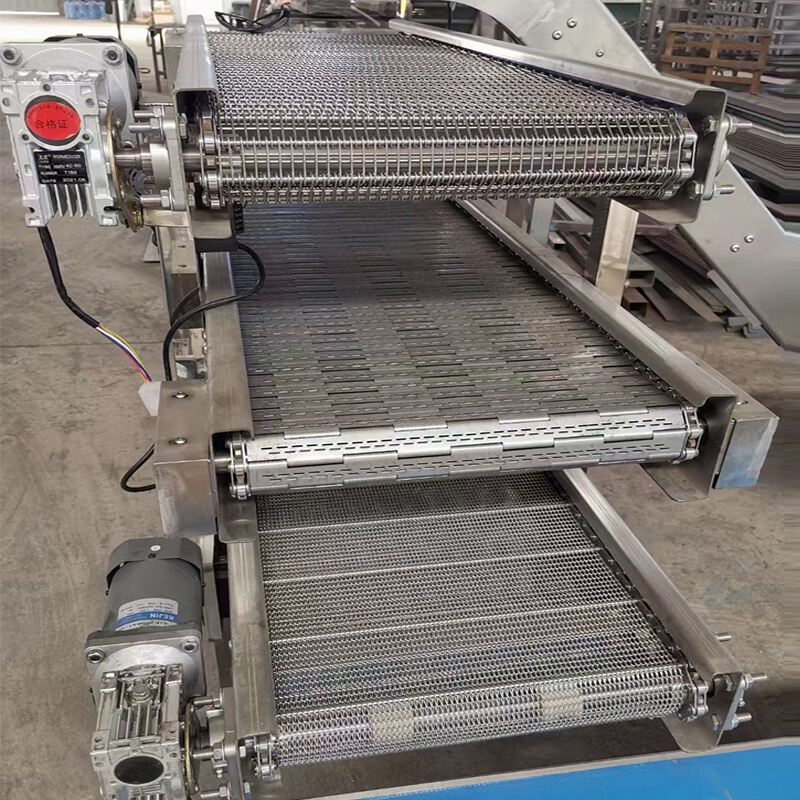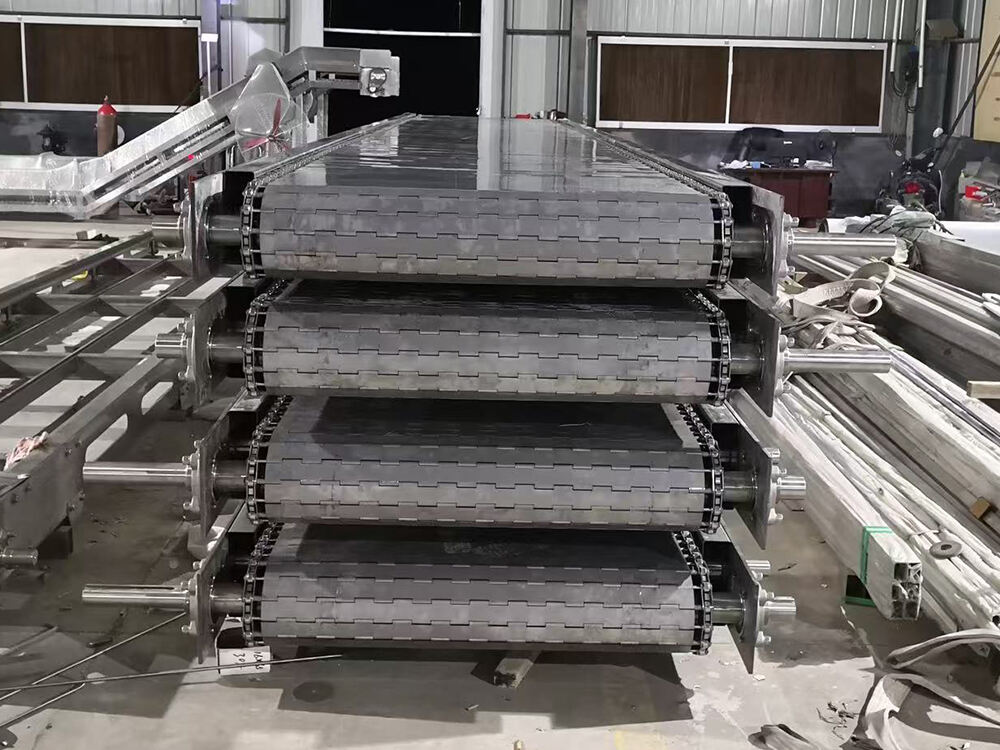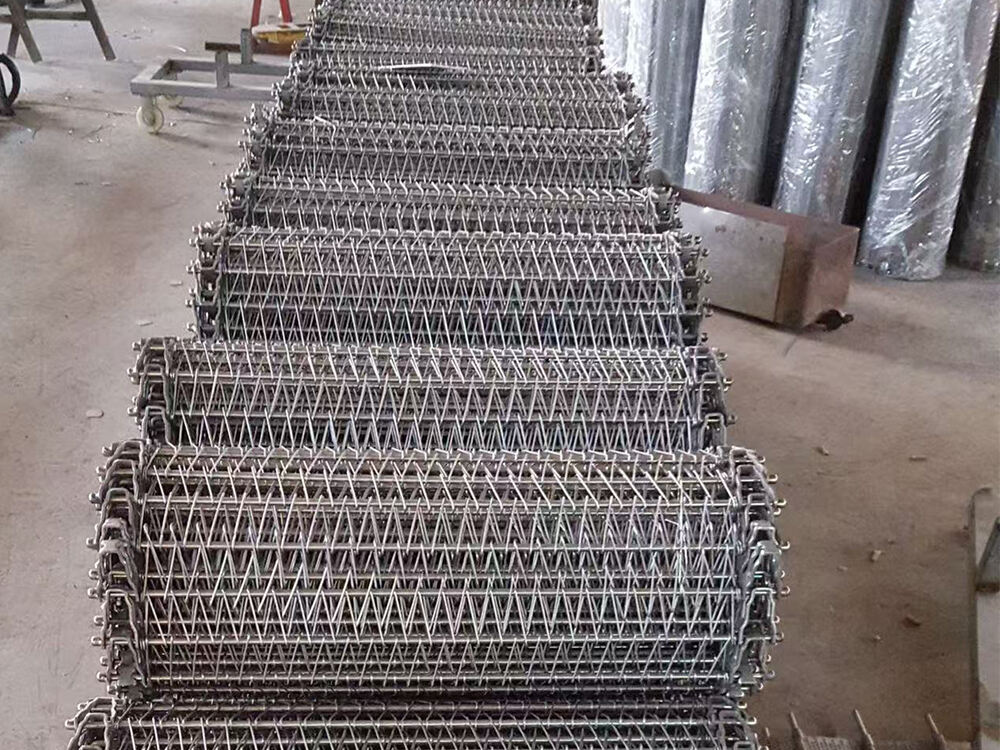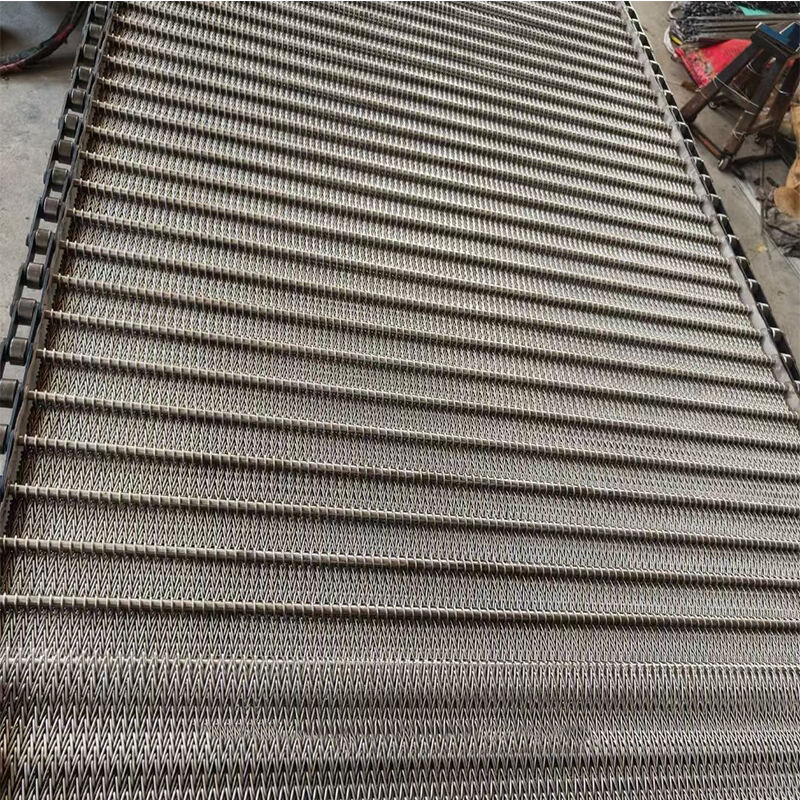
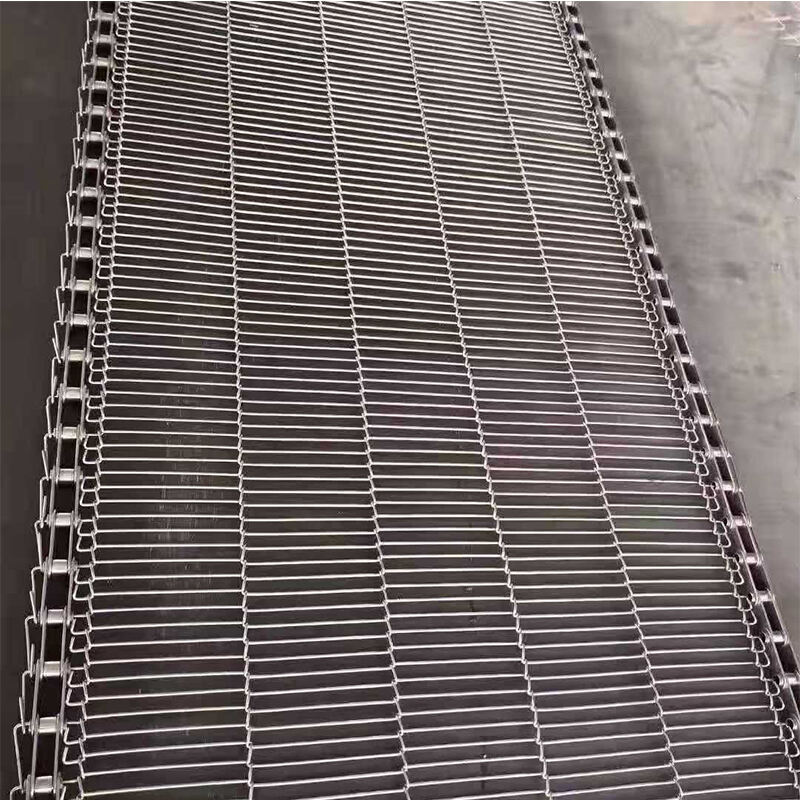
Conveyor systems with limited space, tight turns, or small-diameter end pulleys require a highly flexible mesh belt. Flexibility refers to the belt's ability to bend easily and repeatedly around small pulleys without causing permanent deformation or fatigue failure in the wires. This characteristic is primarily determined by the belt's construction and the diameter of the wires used. Belts made with fine, round wires and a simple spiral-link design typically offer the greatest flexibility. They can navigate pulley diameters only a few times larger than the belt's pitch. This flexibility is crucial for compact conveyor designs often found in packaging machinery, small parts assembly, laboratory equipment, and textile processing. For instance, inside a small confectionery wrapping machine, a flexible mesh belt transports individual chocolates through folding and twisting stations, requiring tight bends in a confined space. Similarly, in an electronic component tester, a flexible belt carries PCBs around multiple small pulleys to various testing modules. Using a belt that is too rigid for such an application would lead to poor tracking, increased wear on the belt and pulleys, and potential premature failure. It is important to balance flexibility with strength, as highly flexible belts may have lower load capacities. Our product range includes highly flexible mesh belts designed specifically for small conveyors and tight-radius applications. Contact us with your pulley dimensions and load requirements to find the ideal flexible belt for your system.

Sunshine all products will make you absolutely satisfied, we always follow the customer first production concept, strive to open up domestic and foreign markets and are willing to establish long-term business cooperation with each customer. Welcome friends from all walks of life to come to guide, discuss cooperation!
 EN
EN